Astro 101 — Introduction to Aspects

aspects

Are you ready to step a bit deeper into Astrology?

If so, I got your hookup!

Let’s review what we have learned so far:

  • Astronomy
  • Basic Jungian Psychology
  • Gender
  • Orientation
  • Elements and Signs
  • Houses

Now, before we get started on the planets (they are next), I want to spend a blog post on aspects.

What is an aspect?  (GEEK ALERT)

First, you need to imagine a circle – in this case, the horoscope, which is a circle (360 degrees) that is divided by 12 and creates the signs you know and love.   These twelve signs are 30 degrees each.  (For the math geeks…30X12 = 360)

Next, you need to remember that planets are constantly in motion and move around the signs based on their speed.  The Sun moves at about 1 degree per day, so it moves around the entire zodiac every year.   The Moon moves faster than the Sun and moves through every single sign in about 28 ½ days.  However, the outer planets (Uranus, Neptune, and Pluto) move very slowly and can spend many years in a sign.  Hence, the further away from the Sun a planet is, the longer it takes to go around the Sun.  It is generally accepted that the further a planet is out, it will tend to dominate or color the aspect, but you need to keep both in mind while doing an interpretation.

In this blog post, I am going to focus on the major aspects that I use regularly in charts.  There are many minor aspects, but I feel that they provide nuance to planets, but add little to the discussion.  I may do another post on them in the future.  So, you won’t see any dociles, reptiles, or imbeciles (these aren’t really minor aspects) here.

The Conjunction:

This is the most powerful aspect in a chart and it corresponds to the circle being divided by 1.  In astrology, the conjunction reflects a marriage between two planets.   This means that these two planets are wedded together through the course of a lifetime and these two planets will forever be intertwined together.  In some cases, these two planets get along and in other cases, their energies are so incompatible that it can cause great difficulties if it is not managed and worked out later in life.

For example, the Sun conjunct Mars is a very powerful and dynamic aspect which gives enormous drive and ambition.  These two fiery planets highly compatible.   However, Venus conjoined with Saturn reflects feelings of inadequacy and often struggles through relationships because of deep insecurities.

One thing to note about conjunctions is that the energy is very pure because the division is by 1.  Therefore, all potentials and possibilities of the aspect lie within the conjunction.  I personally use very large orbs and I suggest using 8-10 degrees for a conjunction and you should pay close attention to them because they can often take over an entire chart because their energy is so strong.

The Opposition: 

In the mystical Kabbalah, the number ‘2’ is associated with the beginning of fragmentation.  The potential of the 1 has now been divided into 2 and reflects a pair of opposites and although these opposites are very much alike they represent two different sides of the same coin.

Here is a list of the opposing signs:

Aries – Libra
Taurus – Scorpio
Gemini – Sagittarius
Cancer – Capricorn
Leo – Aquarius
Virgo – Pisces

These pairs are similar in modality and gender, but oppositions in regards to how they express these energies.  So, within this aspect, there is tension, uncertainty and often doubt.

Let me give you an example – Aries has to do with individual development.  It is the sign of ‘me’.  Whereas, it’s opposing sign which is Libra, has to do with relationships.  Taurus has to do with resources, but its opposite sign Scorpio has to do with joint resources.  So, there is a natural disharmony within this aspect that needs to be reconciled and you have to find a way to give life to both sides of the aspect.

In the natural horoscope (this signifies starting with Aries and working our way around to Pisces), oppositions strongly influence relationships (because it evokes a natural 1st house – 7th house relationship).  You will often see one side of the opposition projected onto relationships and our partners carry the parts we do not carry for us until we integrate the opposition.   Essentially, the opposition is an aspect of conflict and it can evoke struggles and enormous tension within the horoscope.

Here is another example:

Let’s say you have a very earthy chart, which would reflect a tendency to need things solid and secure.  Reliability is very important to you, as is dependability.  In your chart you have Venus in Taurus opposed to Uranus in Scorpio.  Your natural inclination is to claim Venus (since she is earthy and in an earthy sign) and project Uranus onto your relationships.  So, although you value relationship structure and do not like change, you will invariably find change and unpredictability in your personal relationships and in your relationships with the outer world.

You feel stable, but everything else feels chaotic and a bit unpredictable. It becomes necessary to eventually bring these two poles together in a way that gives you meaning and eventually allows you to contain anxieties that might occur because of the opposition.  In the case of Venus oppose Uranus, often there is a difficulty holding onto relationships because once you try to structure them, the partner often needs freedom.  This can be very stressful and it requires you to look at your own ambivalence in relationships (after all this is your Venus-Uranus aspect) and to face the fact that ultimately, sooner or later, everything changes and nothing is permanent.  If you are doing shadow work, then oppositions are important and need to be examined closely.

I use 8-10 degrees for an opposition.

The Trine: 

Are you really good at something?  I am.  I am great at studying and putting things together that are often difficult for others.  I can see things quickly that other people do not notice or often ignore.  Some people would say this is a gift, but I think it’s more Mercury in trine to Saturn.

Trines are the result of dividing a circle by the number three and is considered an aspect of harmony and ease.  Psychologically speaking, a trine reflects a part of the psyche that the ego can easily manage.  However, the difficulty with this aspect is that it often lacks the tension necessary, for growth and can create laziness if it isn’t actively pushed or challenged.

Trines are also considered lucky.  If we look at the natural horoscope trines involve elemental similarities and gender identification.

Here are the groupings:

Aries – Leo – Sagittarius
Taurus – Virgo – Capricorn
Gemini – Libra – Aquarius
Cancer – Scorpio – Pisces

Let’s use the aspect that I presented earlier from my chart – Mercury in Virgo trine Saturn in Taurus.

As you can see this is an earth trine and is concerned with what is real and practical.   Mercury is concerned with how we understand life and perceive the world and Saturn is disciplined and critical.  In the ease of the trine, these two planets work together harmoniously.  So, you get an individual who carefully and methodically looks at life and circumstances that are presented to them, analyzing it wholly in order to come to a conclusion because the powers of the mind are disciplined and tend to not stray into the world of fantasy and possibility.  Mercury trine Saturn is concerned with what “is” rather than what could be.

The difficulty with Mercury trine Saturn is that it can sometimes ignore opportunities because it is so focused on the ‘now’ and the big picture can often be ignored because it is too much of a risk or a gamble.  This can often leave you trapped in duties and responsibilities and joy and happiness are often sacrificed for the bottom line.

I use an 8-degree orb for trines.

The Square:

Brace yourself!  It’s about to get real.  When you divide the zodiacal circle by four, you get an aspect that is known as a square.  Out of all the aspects, it is probably the most difficult to experience and the hardest to integrate because the planets involved in a square have little in common with each other.

Here are your squares:

Aries = Cancer + Capricorn
Taurus = Leo + Aquarius
Gemini = Virgo + Pisces
Cancer = Aries + Libra
Leo = Taurus + Scorpio
Virgo = Gemini + Sagittarius
Libra = Cancer + Capricorn
Scorpio = Leo + Aquarius
Sagittarius = Virgo + Pisces
Capricorn = Aries + Libra
Aquarius = Taurus + Scorpio
Pisces = Gemini + Sagittarius

The square is a high tension part of the chart and the planets involved usually reflect areas in your life where problems are likely to occur because the planets tend to be at war with one another throughout your life.  However, because this aspect is so intense, it’s an area where tremendous potential can occur because it makes us determined and restless.

In many ways, the square is the exact opposite of the trine.  Trines are extremely easy aspect that tend to become lazy because they are rarely challenged, but squares are extremely difficult and often provide tremendous drive and motivation.

Like oppositions, squares tend to influence our relationships.  If you count 3 signs over from Aries (30 degrees per sign X 3 = 90 degrees, which is a square) you come to the sign of Cancer and if you do it again in reverse, you come to the sign of Capricorn or the 4th/10th house axis, which I have taught previously has a lot to do with our parents, early childhood, and how this leads to our formation as an individual or our relationship to the world.  So, squares usually reflect long-term issues from childhood that have an enormous effect on our personality.

Let’s work with the example of Mars in square to Saturn:

Mars and Saturn are not the best of friends.  Mars likes to act and can be extremely frustrated when he is restricted.  He builds up steam and often picks a fight when he does not get what he wants.  Saturn is the epitome of restriction and limitation.  Together you can see how this can be difficult – every time Mars wants to act, Saturn frustrates him.

This aspect tension can usually be found in early childhood in which our ability to get what we want is often denied.  This can build up to feelings of inadequacy, vulnerability, and often being predisposed to failing.  As a result, it can create an atmosphere of aloofness which can alienate those around us that could help us get what we want, but are less likely to do so because we appear cold and detached.

In some cases, Mars square Saturn can overcompensate by becoming extremely ambitious and determined and will expend enormous energy to achieve something.  In other cases, Mars square Saturn will simply give up.  This is a constant cycle that on one level or another, will constantly arise for the Mars-Saturn native.

In order to work with this aspect effectively, Mars square Saturn needs to be more approachable and accommodating with others.  This will allow him to feel support by those around him and be able to receive assistance in helping him achieve his goals.  Further, he needs to try to slow down and be patient and perhaps succeed at things one step at a time.  This helps to develop self-confidence and self-worth.

I tend to use large orbs with squares.  8-10 degrees is recommended.

The Sextile:

We arrive at the last of the major aspects.  The sextile is formed by dividing a circle by the number 6 and coming up with an angle of 60 degrees.

The sextile is considered a harmonious aspect and many astrologers consider it a weak trine.  However, unlike the innate luck attributed to trines, sextiles need to be worked on in order for their potential to be realized.

The difficulty with the sextile is that it is a mental aspect because it is connected to the 3rd and 11th house or Gemini and Aquarius.  Sextiles can easily get trapped in thoughts and ideas and may have difficulties taking advantage of the aspect by giving it form. So, sextiles can be considered opportunities, but they are not innate.

Signs in Sextile:

Aries = Gemini + Aquarius
Taurus = Cancer + Pisces
Gemini = Aries + Leo
Cancer = Taurus + Virgo
Leo = Gemini + Libra
Virgo = Cancer + Scorpio
Libra = Leo + Sagittarius
Scorpio = Virgo + Capricorn
Sagittarius = Libra + Aquarius
Capricorn = Scorpio + Pisces
Aquarius = Aries + Sagittarius
Pisces = Taurus + Capricorn

Let’s work with an example – Mercury sextile Mars.

Mercury is the planet of communication and Mars is the planet that gives us drive and determination.  When you combine these two archetypes together, you get a very active mind and excellent communication skills.  People that have this aspect usually latch on to things quickly and your ability to observe things around you is heightened.

Mercury sextile Mars also makes you an amazing negotiator, and your ability to compose arguments that get your point across clearly and precisely gives you an edge in business matters.  However, you have to manage knee-jerk reactions because Mars has little self-control – especially if your opinions are challenged.  This aspect values freedom of thought and freedom of expression and is willing to fight for them.  So, you will often find people with this aspect gifted with a silver tongue, which can be biting at times.

As I said earlier, sextiles are not as easy as trines.  People that have Mercury sextile Mars will often have to work at it for the aspect to express itself optimally, but on a more positive note, it also does not tend to become lazy.  In essence, it is developed over time and once developed provides the native with opportunities that otherwise would not be available.

11


Astro 101 — Hemisphere Interpretation

globe_demoIn the last lesson of Astro 101, I introduced the astrological houses.  If you missed that blog post then I encourage you to read that before you continue with this lesson.  Also, you can read all the lessons from Astro 101 by simply going to the resource page I created to keep everything nice and organized.  In this lesson, we are going to move on to something new the hemisphere orientation of the houses.

One of the main things to remember about astrology is that it’s all about numbers.  In past lessons, we learned that there is one chart, two genders, three modalities, 4 elements and all of this components combine together to become the twelve signs of the zodiac.  While we are learning about the astrological houses, you will notice this pattern continues.

Imagine, if you will, that the chart is a pie (who doesn’t like pie).  You can divide a pie in two different ways – north to south or east to west.  Similarly, we can divide the chart from north to south or from east to west.  In earth science, these are considered hemispheres.  Astrologically, we refer to them as hemispheres as well.  Each hemisphere of the chart has unique qualities or characteristics that are attributed to them.  Planets that are placed in hemispheres will express themselves based on the hemisphere they are in.  This will modify the way they ‘act’ based on their environment.

Let’s get to the meat and potatoes!

Continue reading

Astro 101 — Introduction to the Astrological Houses

Introduction to the houses in astrologyAn Introduction to the Astrological Houses

Did you know that every relationship you have or will EVER have is found in your horoscope?

Well, they are!

Your parents are found in your chart, your love relationships, your pet, your doctor, your educators, your friends, your siblings, and even that ONE person you wish wouldn’t be in your chart is THERE.  IF you didn’t know this, then this lesson is definitely for you!

In my last teaching series of Astro 101, I explained the astrological signs.  We learned about astrological gender, elements, and the modalities that form the 12 signs of the zodiac.  In this series, we will explore the astrological houses which will help prepare us for our study of the planets.

The Astrological Houses

I remember when I first started studying astrology (1984) that I found astrological houses confusing. At that time there were few resources a teenage boy could get in upstate New York – just the random books that could be found in the library.  I understood the signs as they were descriptors of how the planet is going to perform; yet, the houses were baffling to me.  Eventually, I took a high school psychology and learned about projection.  Then the houses began to make more sense to me.  The houses were areas of our life and our relationship with the outer world from the front porch of our Ascendant (imagine yourself sitting in a chair at your Ascendant look out at the rest of the houses).  So, every house has an innate expectation that we have projected upon in since birth.

Claire Martin in her book, “Mapping the Psyche” has a wonderful quote about the difference between houses and signs.  She says:

“The signs dictate a temporal cycle and the houses describes a spatial cycle, the two systems can be superimposed upon each other because, in astrology, every cycle has the same intrinsic meaning.”

Simply put, the signs are seasonal in nature, and they occur simply because the earth moves around the Sun and is measured in 30 degree increments.  The Sun begins its each year (beginning of spring) in the sign of Aries and ends each year in the sign of Pisces (end of winter).  On the psychological level, the sun moving through the signs reflects birth-growth-death-rebirth cycle that is inherent in the seasons and all of life.

The houses, on the other hand, develop spatially because of relationships.  In the 1st house one develops self-awareness in relationship to themselves, the 2nd house we develop a relationship to money, and around the wheel we go creating relationships with individuals and groups until we experience our larger relationship with the collective in the 12th house.  Additionally, since the houses reflect our relationships with others, they are reflections of who we are ourselves since we will project the contents of our personal chart onto the people around us.  The purpose of astrology is to bring our projections back home to the Ascendant, which makes us more well-rounded individuals.

Astrological House Cheat Sheet:

Here is a quick list of the astrological houses and the relationships that exist within them.  Of course, I will go through them more thoroughly but this gives you a jumping off point to start playing with your own houses.

1st house Relationship to ourselves and the immediate environment
2nd house Relationship to our money, values, possessions, and body
3rd house Relationship to siblings, neighbors, teachers, and ideas
4th house Relationship to father, family, and early environment
5th house Relationship to children, love affairs, pleasures, gambling, and risk taking
6th house Relationship to work, co-workers, day to day life, routine, health, and pets
7th house Relationship to marriage, spouses, partnerships, and open enemies
8th house Relationship to sex, death, and shared resources
9th house Relationship to travel, higher education, God, religious or spiritual ideas, adventures, and finding a sense of meaning in life
10th house Relationship to mother, the public, our career, and our boss
11th house Relationship to friends, colleagues, collective society, and political idealisms
12th house Relationship to the collective unconscious, dreams, myths, ancestors, and the hidden worlds.


Homework Assignment:

On a piece of paper making a list from 1-12.  Write down the sign on each of the houses and any planet that may be in the house.  This will give you a bit more grounding in your own chart and an idea of what to look for interpreting your own houses in the sections to come.

Next Lesson:  Chart Orientation

9

The Astrological Signs — Keywords

The Astrological Signs Pt. 4

Welcome back to Astro 101.  We have already covered gender, modality, and elements.  Now we are going to put them all together, which will give us some information about all the astrological signs.

Let’s begin with the fire signs…

The Element of Fire:

The element of fire consists of three signs – Aries, Leo, and Sagittarius.  Fire is concerned with potential and possibilities.  It is deeply intuitive and focused on what ‘could’ be rather than what is.  In fact, ‘what is’ is very mundane and boring for fiery types, and they attempt to avoid reality as much as possible.  This isn’t because the physical world is too much for them to deal with; it’s because the magical kingdom with dragons, prince and princesses, and a glamorous tomorrow is more palatable.   If positively expressed then fire is spontaneous, intuitive, creative, and magnanimous.  However, if fire is burning a bit too bright or is negatively expressed it can be egotistical, impatient, compulsive, and reckless.

Aries:

Symbol:  The Ram
Natural House:  The First
Orientation:  Masculine
Modality:  Cardinal
Planetary Ruler:  Mars
Myth:  Jason and the Argonauts
Key Phrase: ‘I AM’

Positive Keywords:  initiating, daring, pioneering, energetic, enthusiastic, competitive
Challenging Keywords:  reckless, impulsive, irresponsible, impatient, combative, headstrong

Leo:

Symbol:  The Lion
Natural House:  The Fifth
Orientation:  Masculine
Modality:  Fixed
Planetary Ruler:  The Sun
Myth:  Apollo
Key Phrase: ‘I WILL’

Positive Keywords:  self-confident, radiant, regal, self-expressive, creative, generous
Challenging Keywords:  prideful, vain, pompous, egocentric, melodramatic, spendthrift

Sagittarius:

Symbol:  The Archer
Natural House:  The Ninth
Orientation:  Masculine
Modality:  Mutable
Planetary Ruler:  Jupiter
Myth:  Zeus, Chiron
Key Phrase: ‘I UNDERSTAND’

Positive Keywords:  wise, aspiring, visionary, optimistic, exploring, adventurous
Challenging Keywords:  self-righteous, zealous, dogmatic, scattered, exaggerating, insensitive

The Element of Earth:

The element of earth consists of three signs – Taurus, Virgo, and Capricorn.  Earth is the element that is concerned with concrete reality; the things that you can see feel and touch.  Earth is deeply sensual and often enjoys the finer things in life.  So, they are more than willing to get out the checkbook and spend big if it is on something they find beautiful or gives them pleasure.  Since earth is based on the ‘real’ world (whatever that is), it is often annoyed by speculation and risk-taking.  It likes to take the tried and true road because it is safe and secure, and they deeply fear to risk everything for the sake of momentary adventures.  If positively express then earth is practical, dependable, serious, and enduring. However, if earth is too bound to material structures then it is stubborn, rigid, materialistic, and inflexible.

Taurus:

Symbol:  The Bull
Natural House:  The Second
Orientation:  Feminine
Modality:  Fixed
Planetary Ruler:  Venus
Myth: Theseus and the Minotaur
Key Phrase: ‘I HAVE’

Positive Keywords:  earthy, practical, stable, reliable, patient, domestic
Challenging Keywords:  materialistic, possessive, stubborn, lazy, self-indulgent, uncontrolled appetites

Virgo:

Symbol:  The Virgin
Natural House:  The Sixth
Orientation:  Feminine
Modality:  Mutable
Planetary Ruler: Mercury
Myth:  The Rape of Persephone
Key Phrase: ‘I ANALYZE’

Positive Keywords:  practical, discriminating, meticulous, organized, helpful, economical
Challenging Keywords: petty, picky, judgmental, nitpicking, obsessive-compulsive, neurotic

Capricorn:

Symbol:  The Goat
Natural House:  The Tenth
Orientation:  Feminine
Modality:  Cardinal
Planetary Ruler:  Saturn
Myth:  Chronos/Hera
Key Phrase: ‘I USE’

Positive Keywords:  cautious, responsible, conventional, perfectionist, hardworking, economical
Challenging Keywords:  domineering, fatalistic, stubborn, brooding, egotistic, status-seeking

The Element of Air:

The element of air consists of three signs:  Gemini, Libra, and Aquarius.  Air is the element concerned with ideas. It rules the mind and everything that goes with it.  Air is concerned with putting things together into a strategic formula so that life is civilized, fair, and decent.  This element is the most connected to humans and its three signs are represented by symbols that are the most disconnected from the animal kingdom.  As a result, air finds emotions suspect and often used as a tool of manipulation and will detach themselves from these experiences if pushed.  This can lead to strained and difficult relationships.  If positively expressed air is mental, intellectual, communicative, and social.  However, if air flies up too high or is too detached from their emotions it can be wordy, gossipy, detached, and inconsistent.

Gemini:

Symbol:  The Twins
Natural House:  The Third
Orientation: Masculine.
Modality: Mutable
Planetary Ruler:  Mercury
Myth:  The Dioscuri
Key Phrase: ‘I THINK’

Positive Keywords:   intelligent, bright, rational, sociable, versatile, inventive
Challenging Keywords:  superficial, shallow, gossiping, nosy, inconsistent, high-strung

Libra:

Symbol:  The Scales
Natural House:  The Seventh
Orientation:  Masculine
Modality:  Cardinal
Planetary Ruler:  Venus
Myth:  Judgment of Paris
Key Phrase: ‘I BALANCE’

Positive Keywords: relating, cooperative, balanced, fair, diplomatic, harmonious
Challenging Keywords:  dependent, indecisive, vacillating, overly delicate, gives away power to others, fence straddle

Aquarius:

Symbol:  Water bearer
Natural House: The Eleventh
Orientation:  Masculine
Modality:  Fixed
Planetary Ruler:  Uranus (Saturn)
Myth:  Prometheus
Key Phrase: ‘I KNOW’

Positive Keywords:  reforming, independent, eccentric, unconventional, innovative, inventive
Challenging Keywords:  disorganized, anarchist, deviant, erratic, unpredictable

The Element of Water:

The Element of Water consists of three signs – Cancer, Scorpio, and Pisces.   Water signs are the most elusive of all the elements and they thrive on emotions.  This means that relationships and connection to other people are highly important, and isolation and loneliness can be quite overwhelming.  They deeply fear to be alone and will often compromise their personal happiness to keep others close.  Although ideas and concepts are important to water signs, they will often feel that talk is cheap and that actions trump words.  If water is expressed positively then it is nurturing, emotional, receptive, and protecting.   If it is expressed negatively it can be overprotective, fearful, insecure, and dependent.

Cancer:

Symbol:  The Crab
Natural House:  The Fourth
Orientation:  Feminine
Modality:  Cardinal
Planetary Ruler:  The Moon
Myth:  Tethys and Achilles
Key Phrase: ‘I FEEL’

Positive Keywords:  emotional, sensitive, nurturing, domestic, patriotic, maternal
Challenging Keywords:  insecure, defensive, hypersensitive, smothering, overprotective, stuck in the past

Scorpio:

Symbol:  The Scorpion
Natural House:  The Eighth
Orientation:  Feminine
Modality:  Fixed
Planetary Ruler:  Pluto (Mars)
Myth:  Perseus and Medusa
Key Phrase: ‘I TRANSFORM’

Positive Keywords:  regenerating, transforming, penetrating, erotic, mysterious, magnetic
Challenging Keywords:  power-hungry, obsessive, extremist, vindictive, deceptive, paranoid

Pisces:

Symbol:  The Fish
Natural House:  The Twelfth
Orientation:  Feminine
Modality:  Mutable
Planetary Ruler:  Neptune (Jupiter)
Myth:  Atargatis and Icthys
Key Phrase: ‘I BELIEVE’

Positive Keywords:  imaginative, idealistic, visionary, compassionate, empathic, sacrificing
Challenging Keywords:  chaotic, impractical, delusional, self-destructive, addictive, misunderstood

Download this as a PDF

The Astrological Signs Pt 4

Need answers to life’s pressing questions?  You can contact Storm for a reading today!

24

Astrology 101 is an exclusive product of Storm Cestavani and Storm Cestavani, LLC.  All rights reserved.


Astro 101 — The Astrological Signs Part 3 — Astrological Modalities

Astrological Modalities -- Lesson 3 -- Astro 101 -- Free Astrology Course by Storm CestavaniAstro 101 – The Astrological Signs Part 3 — Astrological Modalities

In our last lesson we learned about the astrological elements (fire, earth, air, and water) and now is time that we move on to the third ingredient to prepare for interpretation which is the astrological modalities.

Have you ever wondered why a Libra does not respond to life exactly the same way as an Aquarius?  How about Leo and Sagittarius?   There is a reason for this – every astrological element (fire, earth, air, and water) are divided into three subsections.  These subsections are called cardinal, fixed, and mutable in astrologese (that’s the language astrologers speak) and these subsections represent the modes or quality of a sign.  In essence, they represent the way that the sign orients itself to achieve something in the outer world.

In Astrology for the Light Side of the Brain, Kim Rogers – Gallagher has this to say about modalities:

“Qualities (modalities) show the signs “energy flow” and describes the general M.O. of a sign – that is, whether it’s more likely to lead, follow, or get out of the way.”

The three modalities are as follows:

Cardinal — Aries, Cancer, Libra, and Capricorn
Fixed – Taurus, Leo, Scorpio, and Aquarius
Mutable – Gemini, Virgo, Sagittarius, and Pisces

Let’s Get to the Meat and Potatoes!

As I stated earlier each of the three elements are divided into three subsections.  These three subsections have different ways of manifesting the elemental qualities of the three signs that exists within each element.  In each case, the natural energy of the element remains the same.  All three of the fire signs seek to find potential and possibility and keeps its eye on the future, all three earth signs seek stability and like to create concrete structures in order to manifest life concretely, all three air signs seek to find meaningful patterns in order to perceive in a logical manner in which everything follows a system or pattern, and all three water signs seek to find meaning through its relationship with others and its tribalistic connection to an honored past.  However, each of the three signs achieve results in vastly different ways and a signs modality describes how the sign is going to take action.

The Cardinal Signs (Aries, Cancer, Libra, and Capricorn)

The cardinal signs are the go-getters of the zodiac.  They love to start things up and get things rolling.  In the Jewish or Kabbalistic tradition, the world was created while the Sun was in the sign of Libra.   On day one (or 1 degree of Libra), the Hebrew Yahweh created the heavens and the earth and the process of creation began.  The cardinal signs are the ones that come up with all the wonderful ideas and are constantly in a state of creating, but unfortunately they often do not finish the projects they begin because they are quickly moving after the next thing.  They are natural leaders and they are often the instigators of action in the world.  However, when the cardinal planet is not working properly or operating from the shadow, they can be controlling, impatient, forceful, and conniving.  The cardinal signs need to realize that although they may create the most perfect mold, it is necessary to let the cement set in order for a structure to have a solid foundation.

The Fixed Signs (Taurus, Leo, Scorpio, and Aquarius)

The fixed signs are the ‘stubborn’ signs of the zodiac.  They do not like to be pushed around and if you try to force them to do anything, you will find yourself in a pitch battle that you will most likely lose – that is unless you are fixed yourself and then you have achieved the classic ‘stalemate”.  Planets in the fixed signs are stable, like to get things done, and love to complete projects.  Whereas, cardinal signs like to begin things they often leave the fixed signs to manage them.   Fixed signs have enormous endurance and can often patiently wait for things to occur or manifest; whereas, the other modalities may have either moved on to the next thing or given up hope out of boredom.  However, this stabilizing quality of fixed signs often leads to rigidity and once a habit is formed it’s difficult to get them to let go of it.  Fixed signs like to feel established and are very determined to achieve their goals.  However, when the fixed planet is not working properly or is operating from the shadow, they can be obstinate, resistant to change, and their internal growth becomes stifled because they often stay stuck in their circumstances.  It is necessary for fixed signs to realize that although having a stable foundation and reliability are great qualities to have; sometimes, one must allow change to occur in order to stay with the times to foster future growth.

The Mutable Signs (Gemini, Virgo, Sagittarius, and Pisces)

The mutable signs like to remain flexible and keep all their options open.  Unlike cardinal signs that like to get things rolling and fixed signs that like to manage things, mutable signs like to remain interested in anything that they are interested in – and usually a lot of different things are on their never ending menus.  If mutable signs become disinterested in something they will often find something else that catches their attention and move on to it quickly without any regret.  Out of all three modalities, mutable signs are the most adjustable and adaptable to circumstances or situations.  They welcome change in its variety of manifestations because change is interesting and the last thing a mutable sign wants to be is bored.  Mutable signs like to avoid strife because conflict requires mental effort which mutable signs would rather use on things they may enjoy.  Mutable signs like to be flexible, versatile, and malleable.  However, when the mutable planet is not working properly or is operating from the shadow, they can be scattered, unfocused, distracted, and restless.  People with a majority of mutable planets need to realize that life is about change and adaptability, yet sometimes it is necessary to take charge and formulate decisions in order to find solid meaning in life.  Although mutable signs are the classic “jack of all trades”, they often make the mistake of never being a master of anything.

Putting It All Together

In our last lesson, we added up the planets to find out which element dominated the horoscope.  It might be beneficial for you to review that lesson once again.  We will do that again for the modalities – here is a cheat sheet for the astrological glyphs if you need them.  I will list them out for those who are not familiar with the glyph symbols.

currentmodalities

Here is a list of all the planets currently in the heavens at the time of this writing.

Sun 09 Capricorn
Moon 29 Scorpio
Mercury 09 Capricorn
Venus 28 Capricorn Rx
Mars 11 Libra
Ceres 22 Libra
Jupiter 17 Cancer Rx
Saturn 21 Scorpio
Chiron 10 Pisces
Uranus 9 Aries
Neptune 4 Pisces
Pluto 12 Capricorn

The Breakdown:

8 planets in cardinal signs (Sun, Mercury, Venus, Mars, Ceres, Jupiter, Uranus, and Pluto)
2 planets in fixed signs (Moon and Saturn)
2 planets in mutable signs (Chiron and Neptune)

Interpretation:

The current astrological planetary positions are overwhelmingly cardinal.  Someone born on this particular day (and I am sure that many babies were), leans towards being an initiator and go-getter.  Goals will be achieved by going out into the world to make things happen.  They are natural leaders, inventive, and will take charge of a situation or circumstance if given a chance. However, with both fixed and mutable planets deficient, it may be difficult for them to sit around and watching things develop, and they may experience difficulties communicating their ideas effectively because they have an adverse relationship with change.  It will be necessary to develop patience and malleability to achieve the far-reaching success desired.

Activity 1:  Get out your own chart.  Use the instructions above and generate your own personal profile.  What modality dominates your chart?  Which modality do you have the least number of planets in?

Need answers to life’s pressing questions?  You can contact Storm for a reading today!

11


Astro 101 – Astrological Signs Part 2 – Introduction to the Elements

Storm Cestavani's Free Course in Astrology -- Astro 101 -- The Astrological ElementsIn our last lesson we learned about gender in the horoscope (introversion and extraversion) and now is time that we move on to the second ingredient to prepare for interpretation which is the astrological elements.  Additionally, everyone can get a copy of their horoscope which you can get for free on my website.   If you do not understand the chart, you can always check out the tutorial that I created to help you understand your horoscope.

Introduction to the Elements of Astrology

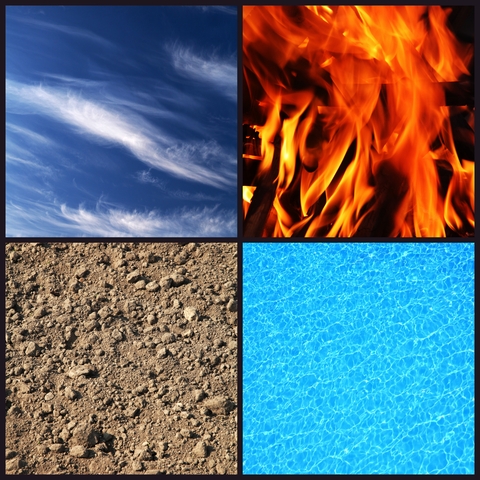
Although many in the psychological field want to credit Jung with the foundation of the psychological types, it is in fact a system that has more classic roots.  If one studies the works of Plato or Sicilian philosopher Empedocles one gets a whiff of a system that is much older than our modern lens and even ancient alchemists dipped their feet in the ambiguous world of matter.  Astrologers have also used a “system” of types for over 2,000 years and they were referred to as elements – they are fire, earth, air, and water.

So, what are these mysterious elements that ultimately lead to Jung’s typological map?

Kim Rogers – Gallagher says the following about the astrological elements in her book, “Astrology for the Light Side of the Brain”.

“Everything that you know about the elements is absolutely the same when it’s applied to the signs.  The four elements, then – fire, earth, air, and water – act the same way in human form as they do in their natural forms.  We all know folks who can only be described as “fiery”, “earthy”, “airy”, or “fluid”.  Each of these words describes the general temperament and basic motivation of the three signs that belong in its group.” (pg. 59)

The four groups are as follows:

Fire signs – Aries, Leo, Sagittarius,
Earth signs – Taurus, Virgo, Capricorn
Air signs – Gemini, Libra, Aquarius
Water signs – Cancer, Scorpio, Pisces

Although Jung did not originate the concept of elements, he did extrapolate them and make them understandable through a psychological lens.  Jung felt that the functions (elements) reflects a particular mode of perception that would allow an individual to understand life through his conscious mind.

A Critical Dictionary of Jungian Analysis (Andrew Samuels, Bani Shorter, and Fred Plant) describes the functions as the following:

Some individuals are more excited or energized by the internal world and others by the external world; these are the introverts and extraverts respectively.  But in addition to these basic attitudes to the world, there are also certain properties or functions of consciousness.  Jung identified these as thinking – by which he meant knowing what a thing is, naming it and linking it to other things; feeling – which for Jung means something other than affect or emotion, a consideration of the value of something or having a viewpoint or perspective on something; sensation – which represents all the facts available to the senses, telling us that something is, but not what it is; and, finally, intuition, which Jung uses to mean a sense of where something is going, of what the possibilities are, without conscious proof or knowledge.  A further refinement is that the four functions divide into two pairs – a rational pair (thinking and feeling) and an irrational pair (sensation and intuition).  (para. 1 pg. 153)

Now, before we go further — Jung’s functions were not mean to be a form of “typecasting” or “profiling”.  In fact, Jung believed that our “type” changed over time as new material is integrated from our unconscious into our conscious mind.  (In Astro 201 we will learn an astrological tool called progressions which is a great way to explain Jung’s ‘change over time’ belief).  However, we can translate Jung’s typology into astrological language. Thinking becomes air, feeling becomes water, sensation becomes earth, and intuition becomes fire.

Samuels, Shorter, and Plant go on to say:

“We are now in a position to describe a person’s overall style of consciousness and his orientation towards inner and outer worlds.   Jung’s model is carefully balanced.  A person will have a primary (or superior) mode of functioning, this will be one of the four functions.  The superior function will come from one of the two pairs of rational or irrational functions.   Of course the person will not depend exclusively on this superior function but will utilize a second, or auxiliary function as well.  This, according to Jung’s observations, will come from the opposite pair of rational or irrational functions depending on whether the superior function came from the rational or irrational pair.  Thus, for example, a person with superior function of feeling (from the rational pair) will have an auxiliary function of either sensation or intuition (from the rational pair)”. (para. 3, pg. 153-154)

Like all Jungian theories, typology can be extremely dense and takes a bit of consideration in order to understand its complexities.  Let me break it down for you.

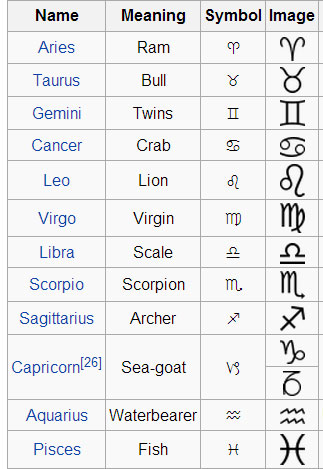
In our last lesson, we added up the gender polarities to help ascertain whether someone leans more introverted or extroverted.  It might be beneficial for you to review that lesson once again.  We will do that again for the signs – here is a cheat sheet for the astrological glyphs if you need them.  I will list them out for those who are not familiar with the glyph symbols.

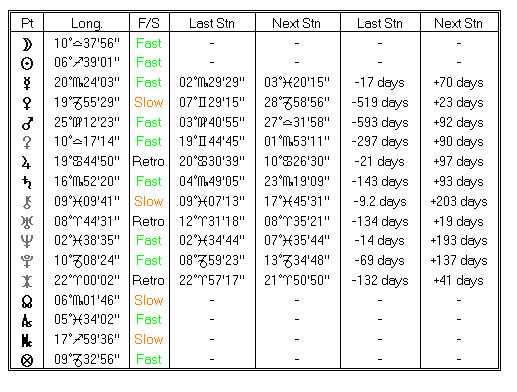
Here is a list of all the planets currently in the heavens at the time of this writing.

Moon – 10 Libra 37
Sun – 06 Sagittarius 39
Mercury – 20 Scorpio 24
Venus – 19 Capricorn 55
Mars – 25 Virgo 12
Ceres – 10 Libra 17
Jupiter – 19 Cancer 44
Saturn – 16 Scorpio 52
Chiron – 09 Pisces 09
Uranus – 08 Aries 44
Neptune – 02 Pisces 38
Pluto – 10 Capricorn 08


Below is an image to show you the grid I am using. Astrological Elements in the horoscope

Fire planets – Sun in Sagittarius, Uranus in Aries
Earth planets – Venus in Capricorn, Mars in Virgo, Pluto in Capricorn
Air planets – Moon in Libra, Ceres in Libra
Water planets – Mercury in Scorpio, Jupiter in Cancer, Saturn in Scorpio, Chiron in Pisces, Neptune in Pisces

Based on the current planetary standings, the energy leans more towards introversion and dominated by water planets.

Activity 1:  Get out your own chart.  If you do not have a copy you can get one for free on my website.  Use the instructions above and generate your own personal profile.  What element dominates your chart?

Interpreting the Four Astrological Elements

Jung felt that each of the elements had an opposite and although they do not match up with astrological opposites (we will get into those when we do aspects), my experience has found them valid.  Let me give you the quick astro-formula:

Thinking (Air) ————————————- Feeling (Water)
Intuition (Fire) ———————————— Sensation (Earth)

Activity 2:  Get out your own chart.  Which element dominates your chart?  What is your opposite element?  For example, if Water (Feeling) dominates your chart as it does in our example, then the opposite or shadow element is Air (Thinking).

Now, let’s go through the four elements.

The Fire Signs:  (Aries, Leo, Sagittarius)

I decided to start with the most difficult to understand first.  The element of fire corresponds with Jung’s idea of intuition.  However, in modern pop culture, the word intuition is highly charged and is defined as anything from a “gut feeling” to “precognition and mediumship” – many of which would be more appropriately defined as perceptive.  Fire signs, though, are not necessarily motivated by talking to the dead (although some may be) or being overly sympathetic and emotional, they are more concerned with potential and possibilities.

In mythology, the element of fire is assigned to the gods.  It is volatile, imaginative, uncontainable, and separated the godhead from mere mortal flesh.  The most famous story, of course, is Prometheus stealing fire from the gods and giving it to mortals.   Zeus has a fit and punishes Prometheus to hang off a mountain for eternity having his liver eaten out by an eagle.  For the gods, worship by human beings is intrinsic to their survival.  If humans could envision the future and/or experience insight (all fiery qualities), then the worship of deities (that are really not concerned with the plight of man) would become irrelevant.

So, what is this potent thing we call fire?  Simply put, it is the power of the imagination.  Fire is our ability to look into the future and hope for tomorrow, and all three of the fire signs have copious amounts of this inspired vision.  You can find them everywhere using their creative powers to make the world a better place (which can often be as ill-conceived as any other vision).  However, if the fire signs blaze has been snuffed out, it tends to smolder, is often angry, and can suffer maladies such as depression and apathy.

The biggest difficulty with the fire signs is that they have problems with physical reality.  The world of rules, responsibilities, and structure are rather dull, banal, and boring for the fiery types.  After all, fire cannot be contained and when it is trapped it will often burn itself out.  Fire needs to be free in order to envisage a vast world of colorful creations in order to tap into their own unique style and purpose.  Being ordinary is not acceptable and when one is entrusted with the element of the gods; it should be taken seriously.

The Earth Signs (Taurus, Virgo, Capricorn)

The element of earth is the most tangible. We can see it, feel it, touch it, smell it, and taste it.  It’s connected deeply to our senses and Jung referred to it as the function of sensation.  The world of earth and its signs represent the material world.  It’s our banking institution, our values, the rituals we do on a daily basis, our career, jobs, and our position in the world.  Earth is the skin we wear that protects us from external influences and allows us to adapt to the physical world and survive.  Earth signs are motivated by what they can achieve and what is accomplished after hard work is performed and these industrious signs will work endlessly to achieve their goals.

In mythology, the element of earth is symbolized by the Great Goddess.  The Greeks called her Gaia and she represented the laws of nature and physical reality.   She presides over the seasons, time, life, and eventually death.  As human beings became more advanced, the worship of Gaia eventually became more humanized and morphed into the worship of her daughter Rhea and eventually her granddaughter Demeter (we will meet her when we study dwarf planet Ceres) who presided over the Eleusinian Mysteries.  In the age of Judea Christianity, much of the worship of the cycles of time have been discarded by more fiery ideas of everlasting life and the redemption of the soul through faith, yet as much as we try to run from her domain, the goddess always (one way or another) comes to claim us.

Earth is what provides our lives with structure and foundation.  You can find them thriving in the financial world, business management, pet clinics, and in our agricultural fields.  Individuals who are dominated with earth have a need to actualize their desires in concrete form and tend to avoid areas of life that are “iffy” or based upon random speculation.  If earth is not working properly within a horoscope, then problems with the body and health can begin to occur and in many cases blind fanaticism can erupt from their unconscious forcing them to form allegiances with curious bedfellows in order to feel grounded and stable.

The biggest difficulty for earth is the world of the irrational and intangible.  For earth, if you can’t use one of your senses to experience something then it simply does not exist.  However, this creates a black and white construct of the world, which often lacks color, originality, and spontaneity.  Many later in life, often look back at a life that has been unlived and replaced by the pursuit of the physical which leaves one wanting more of the physical in order to feel accomplished.  Earth needs reality and its ability to cope with the world is admirable, yet in order for earth to feel fully complete it needs to couple reality with inspiration and success to achieve individuality.

The Air Signs:  (Gemini, Libra, and Aquarius)

We move out of the world of the imagination and the physical realms and land smack in the middle of the vast fertile land of ideas which is what the air signs are all about. You see, they dig communication, education, understanding, and most of all sharing their ideas and opinions with others.  The fastest way to drag an air sign down is to eliminate their freedom of speech and you strip them of their capability of relating to others.

In mythology, if one wants to breathe in the freshness of the airy realms, one only needs to look towards the heavens, which is the home of God or the mountainous realms of Olympus where the 12 Olympians Gods decree their will upon more chthonic mortals.  Of the 12 Olympians, the daughter of Zeus, Athena, is the most humanized and represents the power of mental prowess and diplomacy.  She is the goddess of Justice of the mental and cerebral worlds and it is through her domain that we have evolved into democratic societies with legal systems that are just and appropriate for the offenses committed.  Further, through the Orestes myth, she formulates the first human jury – where an individual is judged by his peers rather than by the systems of authority alone.  In essence, Athena represents progress.  The progress of the human mind as it acquires knowledge and experience then applies it to everyday life.

Air represents the human mind which has the capacity to learn, think, and reason.  It’s responsible for all those groovy and cool electronic devices that you have scattered throughout your house.  Every time you make plans, create strategies, come up with that brilliant idea, or sit around in conversation with friends you are using the airy functions.  In addition, air provides us with our capability of having relationships with others.

The difficulty for the airy realms is the world of emotions.  They are messy, sticky, and overly connected to the instinctual realms.   They can be overwhelmed by emotional outbursts or covert moods which air finds manipulative, controlling, and uncivilized.  Although relationships are in the airy domain, this is an arena of great difficulty for many air signs because relationships require emotional connection and empathy not problem solving and rationalizations.  At times, this gets air into enormous trouble because those of a more sensitive nature might feel undervalued or ignored.  Although air needs the rational intellect, in order for air to evolve and live a more rounded life they need to embrace their feelings and primal connection to their roots which ultimately matter more to them than abstract ideas and concepts.

The Water Signs (Cancer, Scorpio, Pisces)

The element of water is magical, mythical, destructive, monstrous, and redemptive.  Jung referred to water as the function of feeling in his typological system, and astrologically water refers to the world of human emotions.  Water loves to feel – in fact it thrives on it.  Water signs are usually found in the helping professions and doing good charitable works because it helps them inwardly feel connected to the human condition.  They become connected to all of life which is the primal waters that the cold blooded creatures that represent the water signs crawled out of.

In Mythology, water deities are elusive, at best.  In Greek myth, the lord of the seas is Poseidon who is not really that watery of a deity as he is most noted for being the god of earthquakes.   In many myths, water is simply the primal life force that all life emerges and eventually the depths of where all life returns.  In essence, the sea reflects the cycles of time and is a close cousin to the introverted earthy realms.  Yet, whereas earth is structured and firm, water is elusive and mysterious and filled with monsters and creatures that have terrified people for aeons.  However, behind that monster (which often reflects an inner monster) is the buried treasure that holds the secrets to our individuality.

Water is our connection to the instincts.  It connects us to the primal world of the animal kingdom, which despite our modern airy attempts (see above) to rationalize and civilize society, we are part of.  It joins us to our family and our roots, our heritage and our patriotism, and our urge to protect and sustain.  The element of water connects us to the similarities of man rather than the differences, and through this experience we experience compassion, understanding, and unconditional love.

Water does have its weak points.  Our urge to be part of a group and feel bound to other individuals, not only through our need for community and our binding connection through our DNA, often minimizes our need to be individual as a unique.  Those with a strong emphasis of water, often have difficulties expressing their own opinions, and instead opt to repeat arching collective idealisms that are not truly their own.  Although water signs often have strong values and loyalties, those values are often based on societal and familial allegiances rather than the true essence of their individual nature.  For water to experience wholeness, it is necessary for them to leave the “pack” long enough for them to experience what they truly believe themselves and add those beliefs to society, rather than allow society to dictate and often dominate their lives.

In our next lesson, we will add modalities to our understanding of the astrological signs and then put it all together to give you a profile of your temperament.  However, we will explore the elements more deeply as we begin to move through each astrological sign.

Please feel free to leave any questions or comments in the section below.  If you are confused by anything or need further clarity, I am here to assist you.

Need answers to life’s pressing questions?  You can contact Storm for a reading today!

17

Astro 101 — The Astrological Signs — Part 1: Gender in the Horoscope

dreamstime_xs_28715024Astrology 101 – An Introduction to the Astrological Signs (Part 1)

In our last lesson we learned about the astrological planets and now is time that we move on to the second ingredient to prepare for interpretation which is the astrological signs.  Additionally, everyone can get a copy of their horoscope which you can get for free on my website.   If you do not understand the chart, you can always check out the tutorial that I created to help you understand your horoscope.

The section on the Astrological Signs will be divided into 4 parts.

The Agenda:

Part 1: Gender – Do signs have sexes?

Part 2: Element – What are the astrological elements?

Part 3: Orientation – What are the three astrological orientations?

Part 4: Putting it All Together

So, grab your coffee, tea, or a nice beverage and get ready because there is a lot to cover.  I would suggest reading over these sections slowly as we begin to add layers and nuance to your astrological knowledge.

Continue reading

Astro 101 — Introduction to the Planets in Astrology

12Introduction to the Planets in Astrology

In our last session, we discussed the astronomy of the solar system.  I described the major components that we use in astrology of the planets and other entities (energies) that revolve around the Sun.  In case you missed that blog you can always backtrack and read “The Astronomy of Astrology” at your leisure.  Additionally, I think it is time that everyone gets a copy of their horoscope which you can get for free on my website.   If you do not understand the chart, you can always check out the tutorial that I created to help you understand your horoscope.

Let’s now begin with this lesson.

Continue reading

The Astronomy of Astrology

The astronomical basis for astrologyI am going to begin this lesson so we can understand the basic astronomy of the solar system.   As I discussed in the history of astrology, it was not so long ago that both astronomy and astrology were one body and I do feel that it is important to understand where the planets are in our solar system.  Although this could be rather tedious for individuals that would prefer to jump to interpreting their charts, we will use our understanding of the solar system in follow up lessons.

One of the interesting things that I have found about “our understanding” of the solar system is that many of us do not understand it at all.  We know that there is a Sun and a Moon, but beyond that many people do not know how many planets there are.  I recently queried a bunch of my friends and I got random answers from 6 to 11 to 13, and several did not know that Pluto was no longer a planet. That’s right – for those of you that did not know — Pluto is no longer a planet.   Before any Scorpios (Pluto rules Scorpio) start to develop an identity crisis over Pluto’s demotion, in astrology we still consider Pluto a planet.

I am sure that some of you are wondering how this happened?   Why did Pluto get demoted?   We can some this up in one word – ERIS.

OMG…. The Solar System Has Dwarves! (No Dwarves allowed)

dwarf planets in the horoscopeIn January 2005, Mike Brown and his team located in San Diego, CA discovered an object in the solar system that appeared to be larger than Pluto.  Brown and the astronomers at NASA initially called the object the “tenth planet” and gave it the provisional designation of 2003 UB 313.  However, the size of the object would end up becoming a huge problem and internal arguments and debates erupted in the Astronomical Community.

In August 2006, the IAU agreed upon a new definition of a planet in the solar system.   The adaptation of the new requirements for planethood (orbits the sun, has a round shape, and has “cleared the neighborhood” around its orbit) led to the demotion of Pluto to a new category of dwarf planets.  In addition, the asteroid Ceres (which was a planet until 1802 and herself demoted to an asteroid) was promoted to a dwarf planet.   The new dwarf planet that caused such a ruckus was named Eris who (perhaps by synchronicity) was the Greek Goddess of Strife and Discord.  In September 2008, the IAU admitted Haumea as a dwarf planet followed by MakeMake.

OMG MORE DWARFS?

There are several other trans-Neptunian objects under consideration.  Some of these include Orcus, Quaoar, 2007 OR10, Sedna, and the asteroid Vesta.   In this course, I will only be covering dwarf planets Ceres, Pluto, and my preliminary understanding of Eris.   The other dwarf planets Haumaea and MakeMake I may include in the next course if I have had time to work with them.

THE ASTROLOGICAL SOLAR SYSTEM

The solar system in astrology

On the left hand side of this diagram, you will see a yellow glow.   This is the Sun and it is the center of our solar system.  Every planet, dwarf planet, and asteroid revolves around the Sun.

The Inferior Planets 

Mercury is probably the most famous of planets.  In recent years, pop culture has become very familiar with the astrological phenomena of Mercury retrograde.   Mercury moves around the Sun very quickly and it takes it 88 earth days to circle the Sun.   Mercury never gets more than 27 degrees away from the Sun, so it is usually found in the same sign or the one before or after it.

Venus is the next inferior planet.  It was named after the Goddess of Love in Roman Mythology, and like Mercury moves around the Sun rather quickly.  A Venusian year is 224-225 earth days.   The great irony about Venus is that one of her days is longer than it takes for her to revolve around the Sun.   Venus rotates very slowly on her axis and one day on the planet is 225 earth days.   Venus is never more than 48 degrees from the Sun.

Earth and Moon

This is where we live, and because we stand upon the Earth we do not measure the location of Earth in a chart in western astrology.   Since it is the observation point of the solar system, the Earth is always in the opposite astrological sign to the Sun.  For example, if you lived on the Sun right now (please bring a large air conditioned igloo) you would find the Earth in the sign of Pisces.  Why?  The Sun (as of this writing) is in the sign of Virgo.  It takes the Earth 365.25 days to revolve around the Sun.  This is called 1 year.   Further, the Earth is the only planet in the solar system (as far as we know) that intelligent life exists.

Earth is the first planet in the solar system that has a satellite that orbits it.  Although we refer to it as the “Moon”, its name is actually Luna.  The Moon revolves around the earth every 28-29 days.   Every month at the New Moon we begin a new lunar month, which is still part of many religious systems.

The Superior Planets:

The first superior planet in the solar system is Mars.    Mars is a rather interesting planet, because it has a rather elliptical orbit and with its striking red color it is very noticeable when it is the closest to the earth.   Mars was named after the Roman God of war and is often associated with bloodshed and anger.   In traditional astrology it is considered the lesser malefic and is often associated with bad omens.  Mars is about half the size of the earth and revolves around the Sun every 687 days or roughly every 2 years.

We Now Interrupt Your Regularly Scheduled Program…

There are many theories about the asteroid belt.  One is that there used to be a planet that existed between Mars and Jupiter, but it was destroyed by either an impact or due to the gravitational pull of Jupiter.  This is now home to thousands of asteroids ruled by their Queen – dwarf planet Ceres.  Ceres takes about 4.60 years to revolve around the Sun.   Within the asteroid belt are three other large sized asteroids which many astrologers use in their forecasting:  Pallas Athena, Juno, and Vesta.

Now Back To Your Regular Scheduled Program…

We now leave the realm of the personal planets – Sun, Moon, Mercury, Venus, Mars, and dwarf planet Ceres.   The next two planets are considered the social planets.  By social, I do not mean Facebook, Twitter, or Pinterest.

The first social planet is called Jupiter.   Jupiter is named after the Roman King of the Gods.  Jupiter is the biggest of all the planets in the Solar System and he is most noted for the ‘huge red eyeball’ structure on his surface.   I suppose, the King of the Gods has to keep an eye out on the universe.  Jupiter takes 11.86 years to circle the Sun.   This is approximately 1 zodiacal sign per year.  In traditional astrology, Jupiter is considered the great benefic and is known to bring luck to those who had his favor.  This could have arisen out of the idea that Jupiter is the giant vacuum cleaner of the solar system, and he protects the inner planets from cosmic debris that might have cataclysmic effects.

The Saturn return is probably the 2nd most talked about astrological phenomena (tied with Eclipses) that occurs around the age of 30 for everyone.  Why?  It takes Saturn 30 years to go around the Sun.   Although Saturn is probably one of the most beautiful objects in the solar system, it is considered the Great Malefic in astrology.   Saturn has many rings that surround it which many feel symbolically represent the limitations and boundaries which confine us to physical reality.   The fact that it is the last planet that is visible to the naked eye amplifies this feeling that Saturn is the barrier to a much larger universe that we fully do not understand.

WTF… First Dwarves and Now Centaurs?

Chiron is a planetoid in the outer solar system discovered by Charles Kowal in 1977.  He became the first of a new breed of galactic objects known as Centaurs.   Although Centaurs travel as close to the Sun as Jupiter and many far past Neptune, Chiron has an elliptical orbit between Saturn and Uranus.  It takes Chiron 49-51 years to revolve around the Sun.

Unlike dwarf planet Ceres, Chiron is not the largest of his kind – that distinction belongs to Chariklo.   There is some debate in astronomical circles that believe one of Saturn’s Moon’s – Phoebe – may have been a centaur that got trapped in Saturn’s gravitational pull.   Other notable Centaurs are Nessus and Pholus.  In this course, I will only be using Chiron and may bring the other Centaurs into a future course.

The Outer Planets:

The first of the two outer planets is called Uranus.  It was discovered in 1781 using a telescope and is considered the first planet of modern times.  Uranus is unique in that he tends to break all the rules, and immediately upon his discovery doubled the size of the known universe.   Uranus is very unique because he spends 42 years with one pole facing the Sun and then 42 years with the other poll facing the Sun.   In total, Uranus takes 84 years to go around the Sun or roughly 7 years through each sign of the zodiac.

Our next planet is Neptune who was discovered in 1846 by Johann Galle.   Neptune has a beautiful blue surface almost the color of the deepest parts of earth’s oceans.   He is named after the Roman God of the Sea.   It takes Neptune 165 earth years to circle the Sun and around 14 years per astrological sign.

The Dwarves:  Hi Ho, Hi Ho It’s Off To Work We Go…

The most famous of all the dwarf planets is Pluto.  As I stated earlier, we still consider Pluto a planet in astrology and there are no plans to kick him out of the planetary pantheon as our close cousins the Astronomers did.   Pluto was discovered in 1930 and has a rather eccentric orbit sometimes coming closer to the Sun than Neptune.  It takes Pluto 248 years to go around the Sun, but he quickly moves through the zodiac sign of Scorpio and crawls through the sign of Taurus.

On December 28, 2004, Mike Brown’s team in San Diego, California discovered Haumea.   Haumea is the strangest of the dwarf planets because she looks like a gigantic Easter egg.  After naming Eris (she is coming), the IAU decided that it would name all ‘outer planet like objects’ after characters in creation myths.   Haumaea is named after the Hawaiian Goddess of childbirth.   It takes Haumaea 283 years to circle the Sun.  Haumaea is currently in the sign of Libra.

The third largest dwarf planet is called MakeMake.  He was discovered by Mike Brown in San Diego on March 31, 2005.   He is named after the Rapa Nui God of humanity and was the chief god of the bird man cult.   It takes MakeMake 309 years to circle the Sun.  MakeMake is currently in the sign of Virgo.

The Fairest of Them All

Now is the final member of Dwarf planets – Eris.   Eris is the dwarf planet that caused all the controversy.   Eris is named after the Goddess of Strife and Discord and as I stated earlier she surely lived up to her name.  Eris is the 9th largest body in our solar system and is believed to be larger than Pluto.  Eris is the slowest of the dwarf planets and takes a whopping 557 years to go around the Sun.   Like Pluto, she has a rather elliptical orbit and moves very quickly through the sign of Libra and crawls slowly through the sign of Aries.   She has been in Aries since the early part of the 20th century and is still currently in the sign.   I will be covering Eris at length towards the end of this course.   I feel that she is very important in astrological charts – especially in Mundane Astrology.

Storm Cestavani – Updated May 2017

9

Down and Dirty History of Astrology

The Down and Dirty History of Astrology:

In January 2011, Parke Kunkle (an astronomer) rocked the world when he said that due to the changes in the Earth’s alignment the dates of many zodiac signs have changed.   This led to mass confusion that spread over social media outlets such as Facebook and Twitter, and ultimately landing on popular television shows hosted by Rachel Maddow and Anderson Cooper.   As an astrologer, I found this very humorous and even spent an entire episode on radio discussing what turned into viral panic amongst those that did not wish to be the sign they were now assigned to.    For better or for worse, depending on whether or not you like the sign of Scorpio or take issue with it, the sign was reduced to a mere 6 days.

I suppose the most amusing part of this whole viral astrological insanity, was that many of the newscasters were laughing about the absurdity of peoples interest in astrology – yet at the same time were reporting about the change of astrological signs because it went viral.  I suppose that they do not sit back understand the great irony that what they admonish was alive and well within the psyches of the collective consciousness, and although it does not matter too many; astrology is still as powerful as it was 4000 years ago.

As Ophiucus (the supposed new zodiac sign) made his way across popular websites, Facebook, and twitter feeds, it took Kunkle sometime to acknowledge that his theory is nothing new, yet simply a 2100+ year old theory developed by Greek astronomer Hipparchus.   According to his math (and a strange wobble of the earth on its axis), Hipparchus realized that the heavens slowly move over time – so what was once in the sign of Aries, is possibly now in the sign of Pisces or Pisces. This theory is known as precession of the equinox, and although some astrological traditions (such as Sidereal and Vedic) use the current constellations as the backdrop of their astrological forecasting, Western or Tropical Astrology is based upon seasonal activity and therefore 0 Aries is always the first day of spring.

I suppose Kunkle needs to take this course!

Although much of the collective consciousness (fancy word for group think) believes the study of astrology is for people who spent too much time watching the movie “Hair” or believing in such hooey as the prophecies Nostradamus, in the ancient past astrology was an honored profession.   The empirical art of astrology, as we know it today roots lie within the ancient Sumerian and Babylonian culture (modern Iraq), which dates back to 1950 BC.   Recording planetary alignments and weather patterns, the priests of Babylonia developed a rather sophisticated understanding of the will of the Gods upon the nation.  Although astrology in Babylonia was not real concerned with individual lives, whether or not the current governmental leader was aligned or in good favor with God had a trickle-down effect upon the citizenry.  The astrologer of this era was a respected member of the governmental hierarchy, and had much influence on the affairs of the leader — after all who would want to irritate the Gods?  Astrology eventually spread to other parts of the world and was an important function in both Judaic and Egyptian cultures.

Whereas the roots of Mundane Astrology began in Babylonia, the roots of Horoscopic or Natal Astrology began after Alexander the Great conquered Egypt.   There were enormous differences in the psychologies between the Babylonian and Greek astrologers.   Whereas the Babylonian astrologers were very concerned with agriculture and understanding the messages of the Gods in order to survive, the luxurious Greeks were more interesting in understanding the dynamics of how the universe operated and were more scientific and mathematically inclined.  The most famous astrologer of the Greeks was Ptolemy who wrote the book “Tetrabiblios”, and along with other astrologers of the era developed the system of Western astrology which included the time of birth of the native, the planets, houses, and signs of the Zodiac.   Since the time of the ancient Greek astrologers, not much in regards to Western astrology has changed concerning our understanding and comprehension of the cosmic science.  Like the astrologers of Babylon, the Greek astrologers were widely respected and held great notoriety in their society.

As Christianity and Islam began to take hold of the religious world during the ‘Middle Ages’ and Renaissance, a curious change began to occur in astrology.   Politics became involved since both Christianity and Islam were religious idealisms based on the God of Abraham whose will should never be questioned and whose timing should never be pronounced.  Although astrology was practiced by many astrologers during this period, there began to be little religious tolerance for practicing astrologers who went underground and began the art of “fortune telling”.   This intolerance continued through the Age of Enlightenment.

In the 20th century astrology began a renaissance of its own, yet unlike centuries prior astrology began to become person focused as the psychology movement began to take hold.  The most noted psychiatrist that took an interest in astrology as a symbolic tool was Carl G. Jung.  His interest has influenced some of the most noted astrologers of the 20th century including Dane Rudhyar, Liz Greene, Howard Sasportas, Charles Harvey, and Richard Idemon – whose contributions to psychological astrology have been substantial.  As we move into the second decade of the 21st century, astrology continues to evolve and expand with various specialized interests including harmonics, a revival of Hellenistic astrology, horary, astrometeorology, and much more.  It is safe to say that astrology will continue to expand through the decades in ways that are probably not even imaginable at the time of this writing.

Further Reading:

Nicholas Campion, A History of Western Astrology
Nicholas Campion, The Great Year:   Astrology, Millenarianism, and History in Western Tradition
Liz Greene, The Astrologer, Counselor, and the Priest

©2017 Storm Cestavani — All Rights Reserved

24